Best Toys for Kitten Development and Play
Explore the best toys for kittens that support physical, mental, and emotional development. Learn how to choose safe and engaging toys for your kitten.
Bringing a kitten into your home is a joyful experience, but it also means taking on the responsibility of their healthy development. One key aspect of kitten care is choosing the right toys that support their physical, mental, and emotional growth. The best toys for kittens are those that engage their natural instincts, encourage exercise, and help build a strong bond with you.
Why Are Toys Important for Kitten Development?
Toys play a vital role in a kitten’s growth. They encourage physical activity, which is crucial for healthy development and maintaining an ideal weight. Mentally, toys spark a kitten's curiosity and enhance problem-solving skills, laying the groundwork for lifelong cognitive abilities. Socially, playtime helps teach kittens essential social skills, like gentle interaction and using their hunting instincts appropriately. Engaging play also provides an outlet for excess energy, reducing the chance of destructive behavior.
What Are the Best Interactive Toys for Mental Stimulation?
Interactive toys are perfect for keeping a kitten’s mind sharp. Puzzle feeders, for example, challenge your kitten to figure out how to access food or treats, enhancing their problem-solving skills. These toys often come in different difficulty levels, so you can increase the challenge as your kitten grows. Laser toys also stimulate their minds, as kittens will eagerly chase the moving light, honing their hunting instincts. Just remember to end the session with a tangible toy they can catch, preventing frustration. Moreover, interactive electronic toys that mimic the movement of small animals can captivate a kitten's attention and provide endless entertainment.
Which Toys Promote Physical Activity?
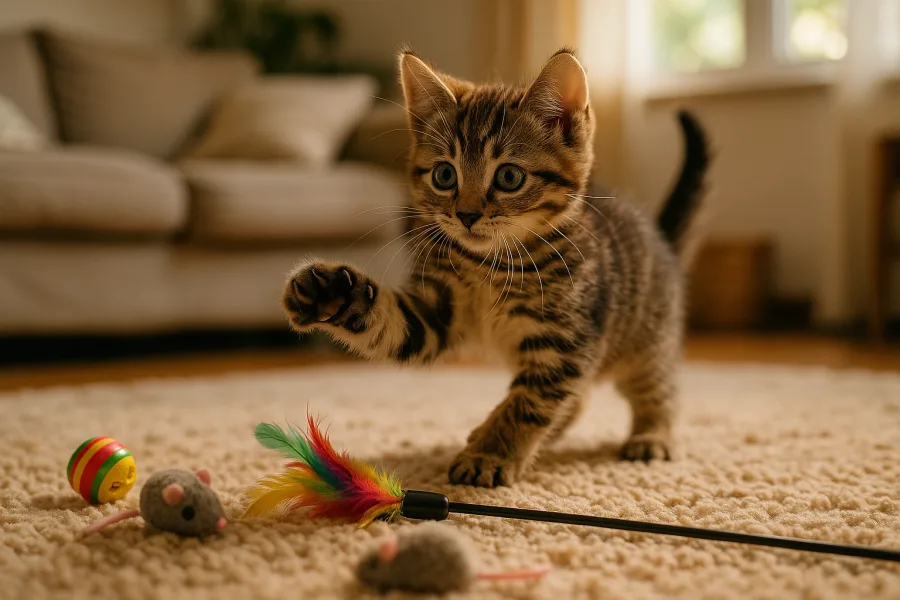
Kittens are full of energy, and it’s important to channel that energy into productive play. Feather wands are excellent for interactive play, allowing your kitten to jump, pounce, and chase, improving coordination and agility. Balls, especially those with bells inside, are also popular, as they can be batted around to mimic prey. The sound and movement keep your kitten engaged and active. Tunnels offer an adventurous playground for kittens to explore and dash through, adding excitement to their playtime. Multi-level cat trees with hanging toys can encourage climbing and jumping, providing a full-body workout.
How to Choose Safe Chew Toys for Teething Kittens?
Teething is a natural part of a kitten's development, and safe chew toys can ease some of the discomfort. Choose toys made from non-toxic materials specifically designed for kittens. Rubber toys are a great choice as they are durable and gentle on the gums. The texture can also massage the gums, providing relief. Avoid toys with small parts that could be swallowed or materials that might splinter, creating a choking hazard. Additionally, consider toys that can be chilled or frozen to soothe sore gums. Always supervise your kitten with chew toys to ensure they use them safely.
How Can Toys Enhance Social Bonding?
Playtime isn’t just about exercise and mental development; it’s also a chance to build a stronger bond with your kitten. Wand toys are ideal because they let you engage directly with your kitten. This interaction fosters trust and affection, as your kitten associates you with positive experiences. Soft plush toys can serve a dual purpose, offering comfort and an interactive element when you play together. Consistent play sessions help your kitten see you as a source of fun and safety, deepening your connection. Incorporating training or simple commands during playtime can further enhance bonding and communication.
Considerations for Toy Safety
When choosing toys for your kitten, safety is a top priority. Avoid toys with small parts that could be swallowed, and steer clear of those made from toxic materials. Regularly inspect toys for wear and tear, replacing them if they show signs of damage. Ensure strings or ribbons are not too long, as they could pose a strangulation risk. Always supervise your kitten during playtime to keep them safe. Keeping a variety of toys available and rotating them regularly can also maintain your kitten's interest and reduce boredom.
DIY Toy Options
If you’re seeking budget-friendly options, DIY toys can be just as enjoyable. Simple household items like paper balls, cardboard boxes, or paper towel rolls can provide hours of fun. Paper bags can double as crinkly hideaways, and old socks filled with catnip can become enticing toys. Just remove any potential hazards, like staples or plastic tape, before giving them to your kitten. DIY toys allow for creativity and can be a fun project for the whole family, enhancing your kitten’s environment with minimal cost.
Quick Summary
- Toys are crucial for a kitten’s physical, mental, and social development.
- Interactive toys like puzzle feeders and laser pointers boost cognitive growth.
- Feather wands, balls, and tunnels encourage physical exercise and agility.
- Select safe chew toys made from non-toxic materials for teething kittens.
- Playtime enhances bonding; use wand toys and plushies for interaction.
- Regularly check toys for safety and rotate them to maintain interest.
- DIY toys offer a cost-effective way to keep your kitten engaged and active.
For more in-depth insights into kitten care, explore the full guide on essential kitten care to ensure you're providing the best environment for your new furry friend.

I've shared my home with pets for over 40 years. No letters after my name, just four decades of paying close attention. I've read widely, watched everything I could find, and learned most of what I know from living alongside animals every day. This site is where I share what I've picked up along the way.
More by Nicole Dance →