How Do Dogs Solve Problems in Their Environment?
Explore how dogs use instincts, learning, and creativity to solve problems in their environment.
Dogs have always captivated us with their unique blend of loyalty and intelligence. As a dog owner, I often marvel at how my furry friends navigate the world with such keen insight. Whether it's figuring out how to reach a treat hidden behind a barrier or opening a door to get outside, dogs showcase impressive problem-solving skills that can rival our own creative thinking.
How Do Dogs Solve Problems?
Dogs tackle problems using a mix of instinctual behavior, learned experiences, and cognitive processes. Much like humans, they rely on a combination of trial and error, memory, and social learning to interact with their environment. While some solutions stem from innate instincts, like a dog's natural ability to dig or chew, others develop through training and observation.
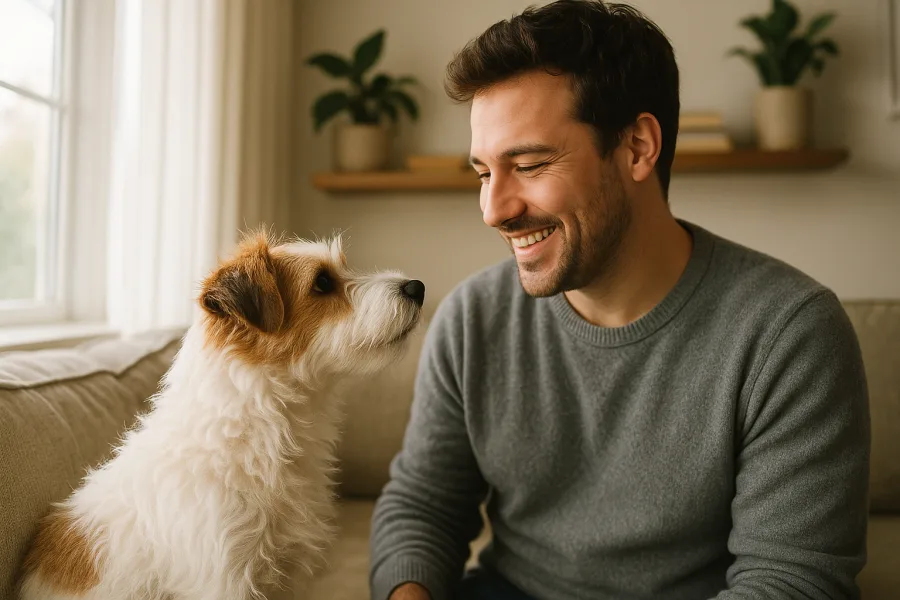
In my experience, dogs often surprise us with their ability to adapt and solve challenges. For example, my Jack Russell cross, Bonnie, is particularly skilled at opening our cabinet doors to access her food. This behavior combines her natural curiosity and learned processes, as she's observed how the doors work and remembers which ones lead to her treats. It's fascinating to watch her use agility and determination to achieve her goals, even standing on her hind legs to reach higher spots.
What Examples Show Dogs Solving Problems?
There are countless examples of dogs solving problems in everyday scenarios. Take a dog trying to retrieve a ball that has rolled under a couch. The dog might first try to reach it with a paw, then nudge it out using its nose. This sequence demonstrates problem-solving through trial and error. Some dogs might even figure out how to move the couch or signal their owners for help, showing advanced problem-solving skills.
Another instance is when a dog learns to open a door by watching humans. Over time, some dogs figure out that pressing down on the handle or nudging the door with their nose opens the gateway to a new adventure. My previous dog, Gypsy, was known for opening the back door using her paws, a skill she mastered after watching us do it many times. The first time Gypsy managed it, we were amazed by her ability to mimic our actions and gain access to the garden.
For more insights into how dogs think and learn, you might explore our detailed guide on dog cognition.
How Do Breed and Personality Affect Problem-Solving?
Not all dogs approach problem-solving the same way. Breed characteristics significantly influence a dog's approach to challenges. Working breeds like Border Collies and Australian Shepherds, known for their intelligence and energy, often excel in tasks requiring strategic thinking and decision-making. On the other hand, breeds like Bulldogs may prefer a more straightforward approach, relying heavily on strength and persistence.
Individual personalities also impact problem-solving abilities. Some dogs, like Bonnie, are naturally more curious and adventurous, leading to more creative solutions. Others may be more cautious, taking time to assess a situation before acting. Owners should observe their dogs to understand these individual differences and tailor activities accordingly. When we introduced Gypsy to Roxy, it was clear that their different personalities required us to approach training and interaction in unique ways.
How Can Owners Encourage Problem-Solving?
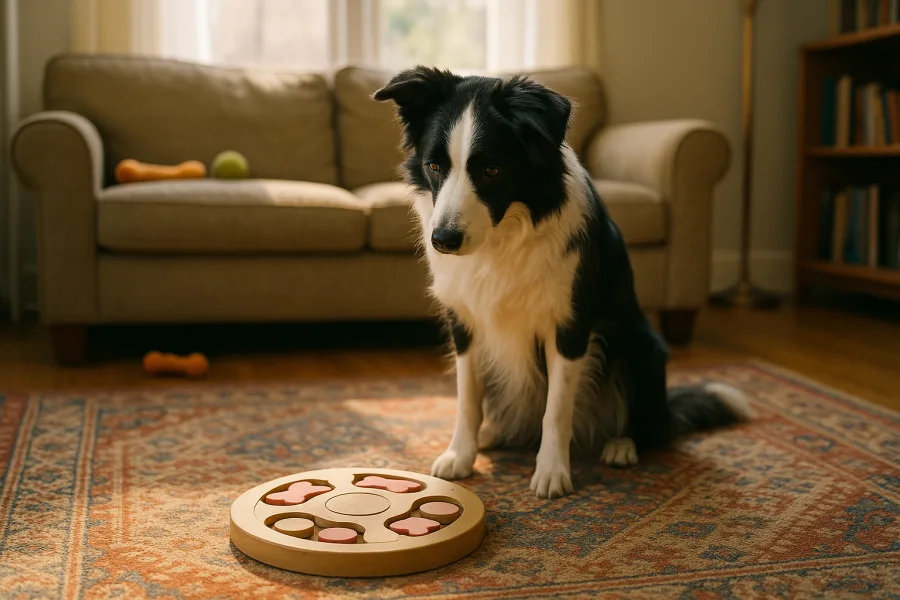
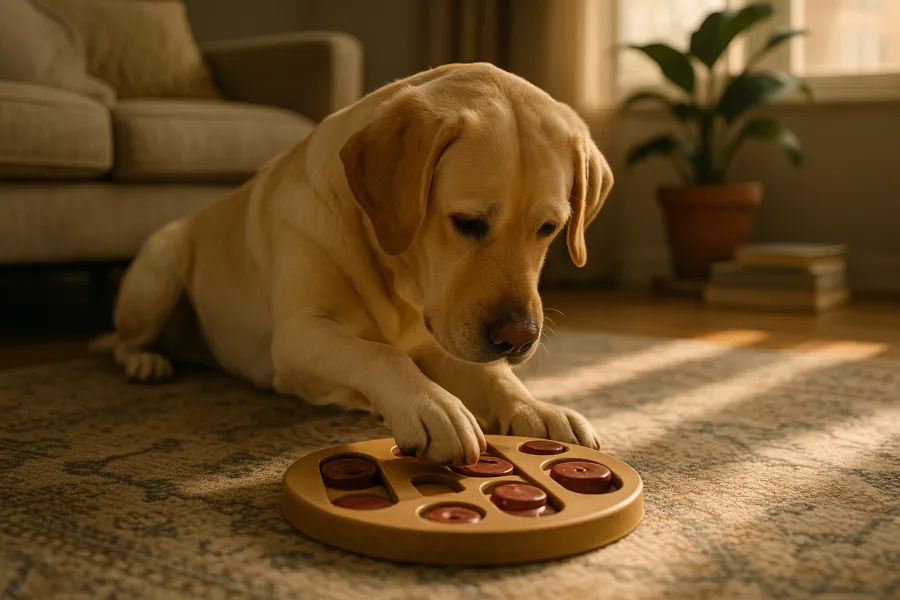
To foster problem-solving skills, creating an environment rich with stimulation is essential. Interactive toys and puzzles can provide mental challenges that engage a dog's cognitive abilities. Puzzle toys that dispense treats when solved are particularly effective, as they reward the dog's efforts and encourage further exploration. I've found that rotating these toys keeps Bonnie engaged, as she never knows what challenge might come next.
Training exercises that involve commands and tasks also boost a dog's problem-solving skills. For instance, teaching a dog to navigate an obstacle course or fetch specific items by name encourages them to think critically and learn through repetition and reward. Engaging in regular training sessions with Bonnie has not only strengthened her problem-solving skills but also deepened our bond as she learns to trust my guidance.
Socialization is crucial too. Exposing dogs to different environments, people, and other animals enhances their ability to adapt and solve problems. It broadens their experiences, providing more learning opportunities and improving their overall cognitive function. Our multi-pet household, including cats like Ginger, has taught our dogs to navigate complex social dynamics, further enhancing their problem-solving capabilities.
Recognizing and Supporting Your Dog's Problem-Solving Skills
It’s important to recognize when your dog is engaged in problem-solving. Look for behaviors such as persistent attempts to achieve a goal, careful observation of their surroundings, and a willingness to try new approaches. These are indicators of their cognitive engagement and curiosity. I often see Bonnie intensely focused on a task, such as figuring out how to retrieve a toy stuck under furniture, showcasing her problem-solving determination.
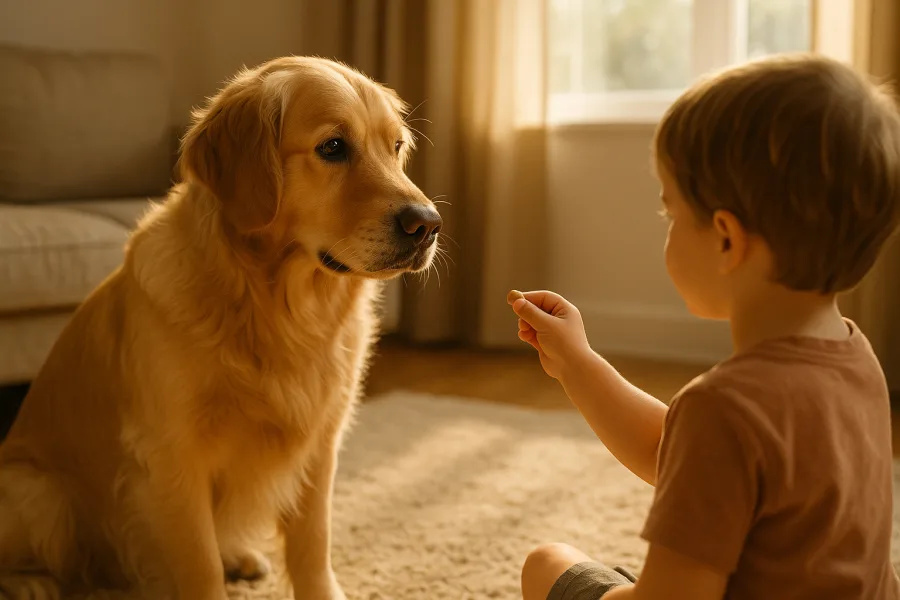
To support these skills, provide regular opportunities for mental stimulation. Rotate toys to keep them interesting, introduce new commands, and celebrate their successes with praise and treats. Encouragement and positive reinforcement can greatly enhance a dog's enthusiasm for solving problems. I remember how Roxy would light up with a wagging tail every time she successfully completed a challenging task, driven by the enthusiasm of our praise.
Summary: Key Takeaways for Dog Owners
- Dogs solve problems through a mix of instinct, learning, and cognitive skills.
- Breeds and individual personality traits influence problem-solving abilities.
- Interactive toys, training, and socialization are key to fostering cognitive development.
- Recognize your dog's problem-solving by observing their persistence and creativity.
- Support and encourage these skills with regular mental stimulation and positive reinforcement.

I've shared my home with pets for over 40 years. No letters after my name, just four decades of paying close attention. I've read widely, watched everything I could find, and learned most of what I know from living alongside animals every day. This site is where I share what I've picked up along the way.
More by Nicole Dance →