How to Recognize a Happy Dog Through Body Language
Discover how to identify a happy dog through body language cues like tail wagging, relaxed posture, and playful behavior to ensure their well-being.
Introduction: Understanding Your Dog's Happiness
As a dog owner, making sure your furry friend is happy and healthy is probably one of your top priorities. Understanding a dog's happiness through their body language is crucial for their well-being. A dog's body language can tell you a lot about their emotional state, helping you know when they are content and when something might be wrong.
In this article, we'll dive into the key signs of a happy dog through their body language, helping you better understand and meet your pet's needs. From a wagging tail to playful antics, these insights will assist you in ensuring your dog is living their best life.
How Can You Tell if Your Dog is Happy?
Recognizing the signs of a happy dog involves more than just spotting a wagging tail, it's about understanding the subtleties of their entire body language. Key indicators include a relaxed body posture, playful behavior, certain facial expressions, and comfortable eye contact. These signs help you gauge your dog's happiness and overall health. If you want the full picture, our guide to Your Dog Anxious or Stressed? Learn the Signs and Solutions covers everything in depth.
What Does a Wagging Tail Really Mean?
A wagging tail is one of the most common signs of a happy dog, but not all tail wags are the same. A high and fast wag often means excitement and joy, while a slower wag with the tail held lower might suggest tentative interest or uncertainty. It's important to consider the context and other body language cues to accurately interpret what your dog's tail wag is saying.
Why Does Relaxed Body Posture Matter?
A relaxed body posture is a strong sign of a happy dog. When calm and content, dogs typically have a loose, wiggly body. Their muscles will seem relaxed, and they might lie on their side or back, showing their belly, a sign of trust and comfort. Recognizing these differences is important since a tense or stiff body can indicate stress or discomfort.
How Do Dogs Show Happiness Through Playfulness?
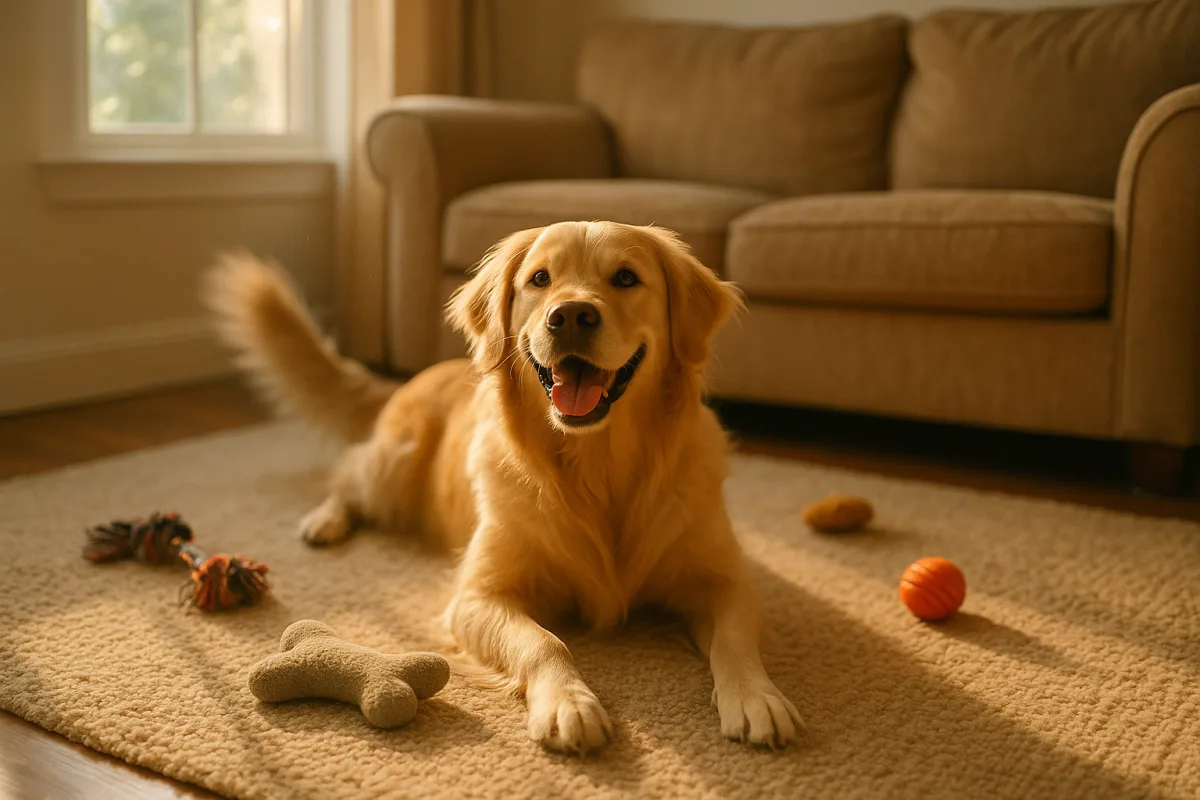
Playful behavior is a clear indicator of a happy dog. This includes play bows (front legs outstretched, rear end up), chasing toys, and engaging in games like fetch. Playfulness not only shows happiness but also strengthens the bond between you and your dog. Frequent play initiation by your dog is a good sign that they are content and enjoying their time with you.
What Do Facial Expressions Reveal?
A dog's face can tell you a lot about how they're feeling. A happy dog often has a relaxed expression, with soft eyes and a slightly open mouth that might look like a grin. Their ears will usually be in a natural position, not pinned back or overly perked up, which can indicate stress or hyper-alertness. Observing these subtle facial expressions will help you understand your dog's emotions better.
Why is Movement Important in Understanding Happiness?
Movement is another key aspect of understanding a dog's happiness. A happy dog often moves with a bouncy, energetic gait, showing enthusiasm and eagerness to explore. They may also have a spring in their step or a playful skip, both indicating a joyful and content dog. If a dog is moving slowly or seems lethargic, it might signal unhappiness or health issues.
Vocalizations: What Do They Mean?
Happy dogs often express their emotions through vocalizations like soft barks, excited whines, or gentle growls during play. These sounds can indicate excitement and happiness, especially when paired with other positive body language signals. It's important to consider the tone and context of these vocalizations to distinguish between happiness and other feelings like anxiety or stress.
Eye Contact: A Sign of Trust and Happiness
Comfortable eye contact with your dog is a strong sign of trust and happiness. A dog that maintains soft, relaxed eye contact is generally content and feels secure in their environment. However, intense staring can sometimes be a challenge or a sign of discomfort, so it's vital to assess the entire body language context when interpreting eye contact.
Healthy Appetite and Sleep Patterns
While not strictly body language, a healthy appetite and regular sleep patterns are indicators of a happy and healthy dog. A dog that eagerly eats their meals and sleeps soundly without excessive disturbances likely feels content in their environment. Changes in appetite or sleep can be signs of stress or health issues, so monitoring these aspects can help you understand your dog's overall happiness.
Conclusion: Key Takeaways for Recognizing a Happy Dog
- A wagging tail can indicate happiness, but consider the wag's speed and position.
- Relaxed body posture shows comfort and contentment.
- Playful behavior is a strong indicator of a happy dog.
- Facial expressions, such as a relaxed face and soft eyes, reveal happiness.
- Movement, like a bouncy walk, can indicate joy and enthusiasm.
- Vocalizations such as soft barks and excited whines reflect positive emotions.
- Comfortable eye contact signifies trust and happiness.
- Healthy appetite and sleep patterns support the signs of a happy dog.
Understanding the various signs of a happy dog through their body language can greatly enhance your relationship with your pet. By staying observant and responsive to these cues, you can ensure your dog feels loved, secure, and content every day. For more insights, explore our comprehensive guide on decoding canine signals and meanings to deepen your understanding of dog body language.

I've shared my home with pets for over 40 years. No letters after my name, just four decades of paying close attention. I've read widely, watched everything I could find, and learned most of what I know from living alongside animals every day. This site is where I share what I've picked up along the way.
More by Nicole Dance →