How to Use Positive Reinforcement in Puppy Socialization
Discover the benefits of positive reinforcement in puppy socialization and how it helps build confidence and social skills.
What is Positive Reinforcement in Puppy Socialization?
Positive reinforcement is a training method that encourages the repetition of desired behaviors by rewarding them. In puppy socialization, it’s essential for helping puppies become well-adjusted and confident in different settings and social scenarios. By consistently rewarding good actions, you guide your puppy to develop strong social skills and a cheerful disposition.
Grasping the importance of positive reinforcement can change your training approach. It focuses on rewarding good behavior instead of punishing unwanted actions. This method not only strengthens the bond between you and your puppy but also creates a positive learning environment. As you begin socializing your puppy, using positive reinforcement ensures they enjoy a variety of experiences without fear.
How Do You Start Using Positive Reinforcement with Your Puppy?
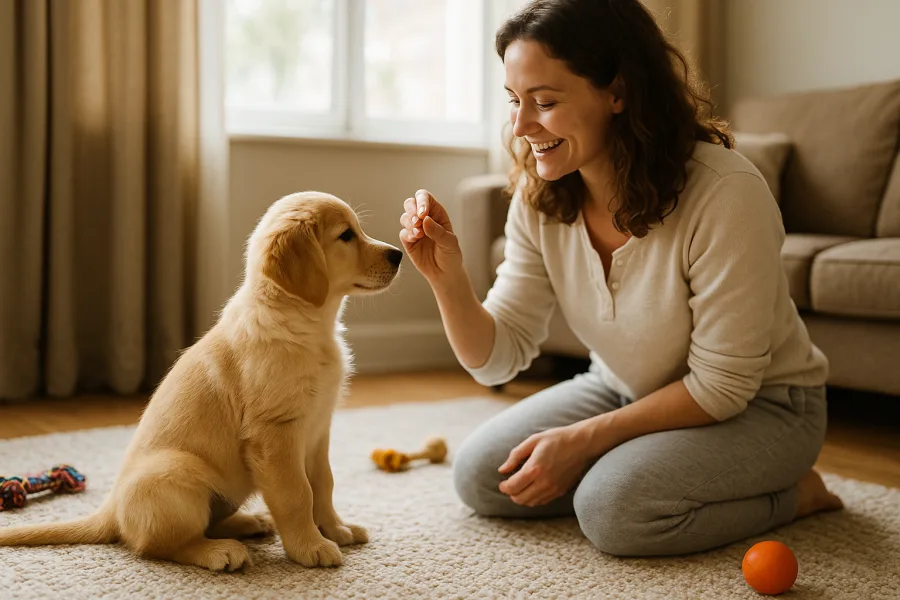
Starting with positive reinforcement involves a few essential steps. First, establish a training routine that allows for regular interaction with your puppy. This routine should include brief, focused sessions to introduce new commands and concepts gradually. Begin with simple commands like "sit" or "stay" and reward your puppy immediately when they comply.
Observing how your puppy responds is crucial. Notice which stimuli they respond positively to and adjust your methods accordingly. Set realistic goals and proceed in small steps, especially when introducing them to new environments or people. This approach helps your puppy stay calm and open to new experiences.
What Rewards Work Best for Puppies?
Choosing the right rewards is vital when using positive reinforcement. Puppies respond well to various rewards, including treats, praise, and play. Treats often work best because they are immediate and effective, especially if they are small, tasty, and easy to consume.
Praise is also a powerful reward. A kind word or gentle pat reinforces good behavior. Additionally, playtime can be a great reward, promoting positive actions while allowing your puppy to burn off energy and have fun. Experiment with different rewards to see which ones your puppy enjoys the most.
Why is Timing Crucial in Reinforcement?
Timing is a critical element of positive reinforcement. Providing a reward right after the desired behavior ensures your puppy associates the reward with that specific action. Delays in rewarding can result in confusion, as your puppy might not link the reward to the correct behavior.
Aim to provide the reward within a few seconds of the action. This promptness helps solidify the connection in your puppy’s mind, making it clear which behavior you are encouraging. With practice, you’ll get better at identifying the right moments to reward your puppy, enhancing your training sessions’ effectiveness.
How to Introduce New Experiences Using Positive Reinforcement?
Introducing your puppy to new environments, people, and animals is a key part of socialization. Positive reinforcement can make these experiences more enjoyable and less daunting for your puppy. Start with gradual exposure, letting your puppy encounter new situations at their own pace. Our complete guide to Identifying Signs of Poor Puppy Socialization has more on this if you want to dig deeper.
For instance, when meeting a new person, encourage your puppy to approach with gentle words and offer a treat when they show interest. Similarly, when visiting new places, such as a park, reward calm behavior. Always be mindful of your puppy’s comfort level and step back if they seem overwhelmed. For more detailed advice on socializing puppies with kids and strangers, you might find useful insights in this guide.
Recognizing Progress and Adjusting Techniques
Tracking your puppy’s progress is vital for successful socialization. Look for signs of confidence and comfort in new surroundings, like a relaxed posture or wagging tail. These signals indicate your puppy is adapting well.
If certain techniques aren’t effective, be flexible and modify your approach. Sometimes, changing the reward type or adjusting the training environment can make a big difference. Always be patient, remembering that each puppy is unique and may respond differently.
Common Mistakes to Avoid
Avoiding common pitfalls can greatly improve the effectiveness of positive reinforcement. One mistake is inconsistent training, which can confuse your puppy. Ensure everyone involved in your puppy’s care uses the same commands and rewards.
Another misstep is overwhelming your puppy with too many new experiences at once. Overstimulation can cause fear and anxiety, counteracting your socialization efforts. Instead, introduce new experiences gradually and at your puppy’s pace.
Lastly, relying only on treats can lead to dependency. Include a mix of rewards, such as verbal praise and play, to maintain a balanced approach to reinforcement.
Quick Summary: Key Takeaways for Successful Puppy Socialization
- Positive reinforcement involves rewarding desired behaviors to encourage repetition.
- Start with a consistent routine and observe your puppy’s reactions to adjust your approach.
- Use a variety of rewards such as treats, praise, and play to keep your puppy motivated.
- Timing is crucial; deliver rewards immediately after the desired behavior.
- Introduce new experiences gradually, rewarding calm and positive behavior.
- Avoid common mistakes like inconsistent training and overwhelming your puppy with stimuli.
For a comprehensive understanding of socializing your puppy, consider exploring this ultimate guide to puppy socialization techniques and timing. With patience and consistency, positive reinforcement can help your puppy grow into a well-mannered and sociable dog.

I've shared my home with pets for over 40 years. No letters after my name, just four decades of paying close attention. I've read widely, watched everything I could find, and learned most of what I know from living alongside animals every day. This site is where I share what I've picked up along the way.
More by Nicole Dance →