Stop Cats from Scratching Furniture: Effective Strategies
Explore why cats scratch and find immediate and long-term solutions to protect your furniture and maintain a harmonious home.
Many cat owners face the challenge of scratched furniture. By understanding why cats scratch and learning to redirect this natural behavior, you can protect your furniture and strengthen your bond with your feline friend. This guide will help you explore why cats scratch, offer immediate solutions to safeguard your furniture, and provide long-term strategies for a harmonious home.
Immediate Solutions to Protect Your Furniture
To quickly protect your furniture, try these easy fixes. Cover vulnerable areas with double-sided tape or aluminum foil, as cats dislike these textures. Alternatively, use furniture covers or slipcovers as barriers against scratching. These covers can be removed when guests visit, allowing you to maintain your home’s appearance while protecting your furniture. For a focused look at this, read our article on Repairing Furniture Damaged by Cat Scratching: A.
Rearranging your furniture might also help. Consider placing less valuable items where your cat frequently scratches, or move furniture away from areas your cat commonly explores. Rearranging to create a more open space can reduce the allure of some furniture pieces as scratching targets. We've covered this in detail in our article on Top Furniture Covers to Protect Against Cat Scratching.
Regularly trimming your cat's nails is another immediate solution. Shorter nails cause less damage, and the activity can be a bonding experience if done with patience. Use specialized cat nail clippers and only trim the tip to avoid cutting the quick, which can be painful and cause bleeding. If you're unsure, ask a veterinarian or professional groomer for advice.
Why Do Cats Scratch? Understanding the Behavior
Scratching is a natural behavior in cats that serves several purposes. It marks territory both visually and through scent glands in their paws, helping cats communicate with other animals and establish boundaries. Scratching also helps cats shed the outer layers of their claws and stretch their bodies, which is important for their physical health. Read our article on Does Declawing Stop Cats from Scratching Furniture? for a more detailed breakdown.
Understanding these natural instincts is crucial. Instead of trying to stop the scratching, redirect it to more acceptable areas. For more insights, explore this article on why cats scratch furniture. Recognizing scratching as a fundamental part of a cat's behavior can help you adopt a more empathetic approach to managing it.
How to Provide Alternatives: Scratching Posts and Pads
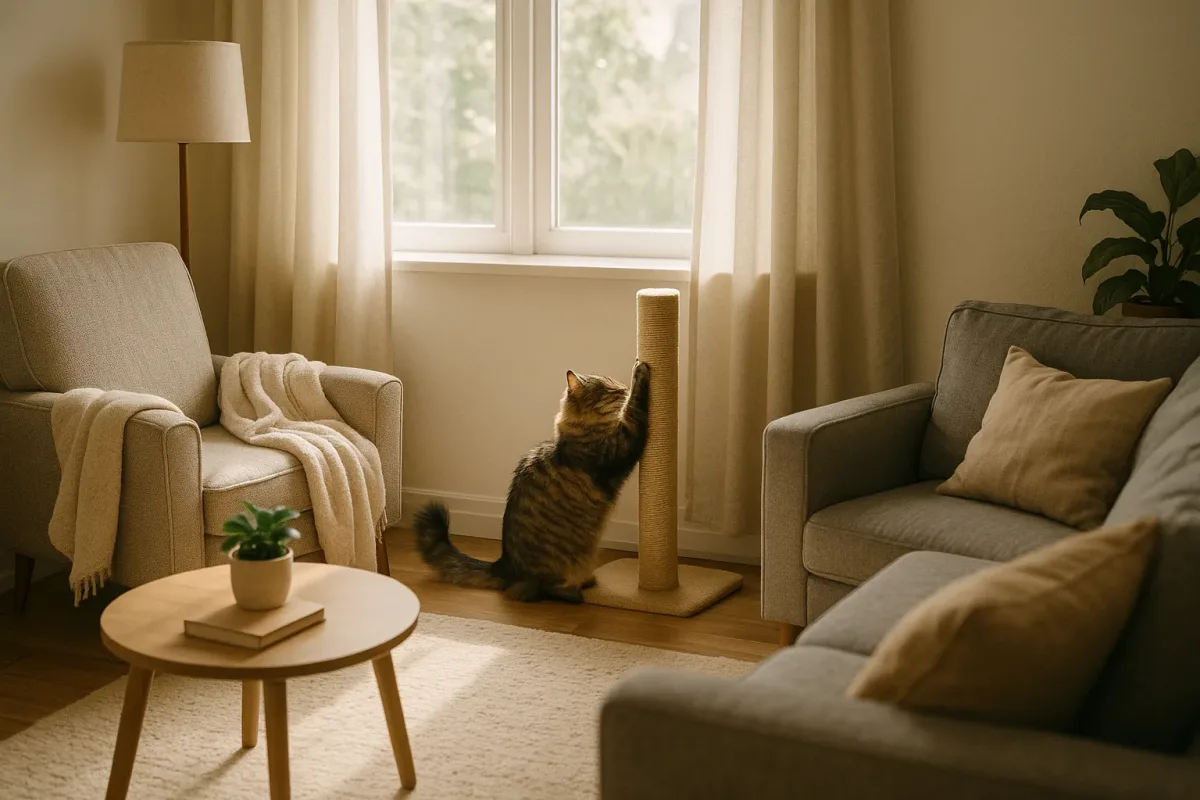
Introducing scratching posts and pads is an effective way to redirect your cat's behavior. Start by identifying whether your cat prefers horizontal or vertical surfaces. Choose a post or pad that matches these preferences. Some cats like the texture of sisal rope, while others may prefer carpeted surfaces or corrugated cardboard.
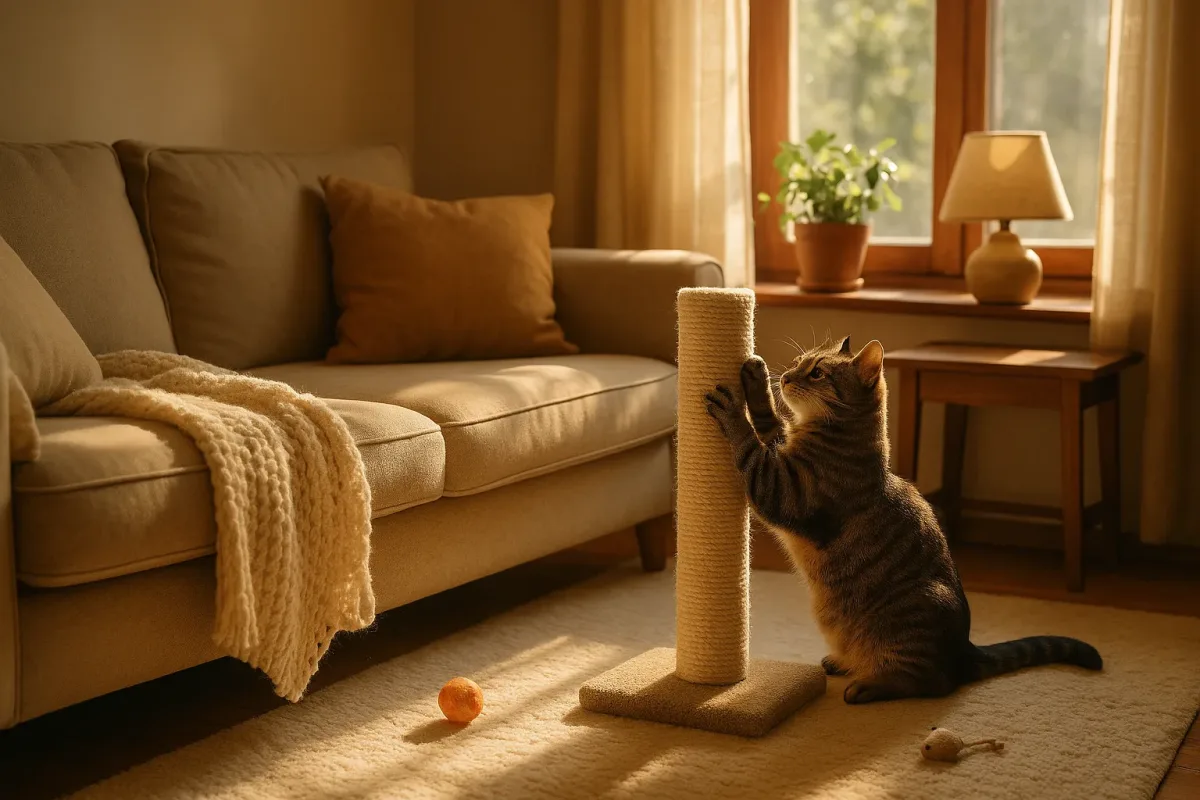
Place the scratching post near where your cat currently scratches. To make it more appealing, sprinkle catnip on it or hang toys from it. Encourage your cat to use the post by playing nearby or gently placing their paws on it to demonstrate the action. Over time, they will associate the post with positive experiences.
Choosing the Right Products
Choose sturdy scratching posts that won't easily tip over. Popular materials include sisal rope, carpet, or cardboard. Ensure the post is tall enough for your cat to stretch fully, and consider having multiple posts in different areas of your home. This variety caters to your cat's changing preferences and ensures they always have an appropriate place to scratch.
When selecting a scratching post or pad, consider your cat's size. Larger cats may need more substantial posts to suit their size and strength. Observing your cat's scratching habits will help you choose between vertical or horizontal surfaces, allowing you to select the most suitable product.
Environmental Enrichment: Keeping Your Cat Engaged
Environmental enrichment is crucial for reducing unwanted scratching. Providing toys, interactive play sessions, and access to windows or bird feeders keeps your cat mentally and physically stimulated. Cats are natural hunters, and engaging their instincts through play reduces the chance of them scratching out of boredom.
Rotate toys to maintain your cat's interest, and consider using puzzle feeders to challenge their minds. A well-engaged cat is less likely to scratch out of boredom or frustration. Additionally, offering a variety of toys, such as balls, feathers, and interactive laser pointers, keeps your cat entertained and mentally stimulated.
A stimulating environment also includes providing safe outdoor access or windows with views of the outdoors. Bird feeders placed outside windows offer endless entertainment, while safe, enclosed outdoor spaces allow for natural exploration and sensory experiences.
Training Techniques for Redirecting Scratching
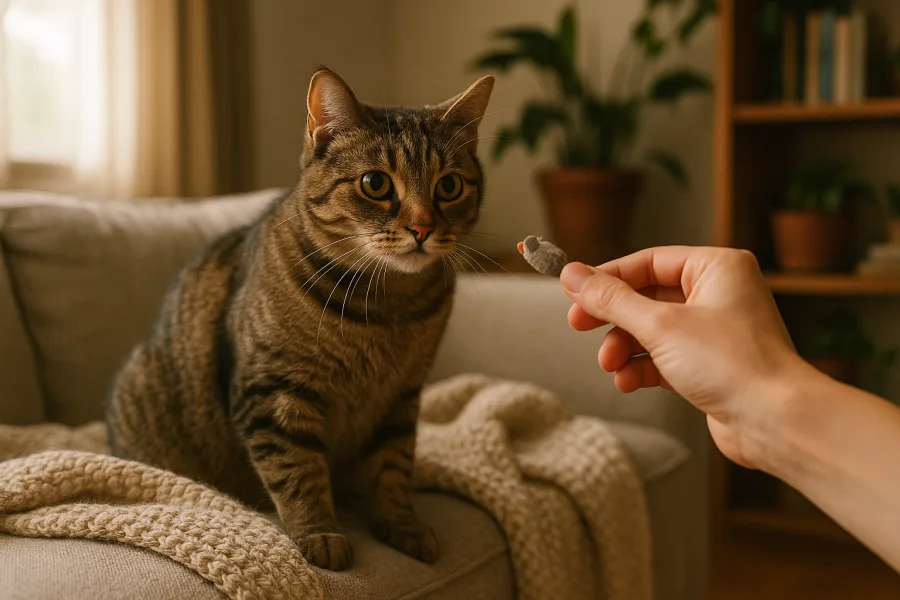
Positive reinforcement is a powerful tool in training cats. Reward your cat with treats, praise, or petting when they use the scratching post. Consistency is key; reinforce this behavior every time it occurs to create a clear association between the desired action and a positive outcome.
If your cat starts to scratch furniture, calmly redirect them to the scratching post. Avoid yelling or punishment, as this can create fear and anxiety, potentially worsening the problem. Instead, gently guide them to the appropriate scratching surface and reward them for using it. Over time, your cat will learn that the scratching post is the preferred option.
Incorporate training sessions into your daily routine, setting aside time to play with your cat near the scratching post. This practice not only encourages your cat to use the post but also strengthens your bond through shared activities.
What Deterrents and Products Can Help?
Various safe products are available to deter cats from scratching furniture. Cat deterrent sprays, such as those reviewed in this article, can make furniture less appealing to scratch. These sprays often contain natural, non-toxic ingredients that are safe for both cats and humans.
Double-sided sticky tape and plastic guards can also serve as physical deterrents. Applying these products to the edges of furniture creates an uncomfortable texture that discourages scratching. Additionally, pheromone diffusers can decrease stress-related scratching by creating a calming environment. These diffusers release synthetic versions of feline facial pheromones, which help reduce anxiety and promote feelings of safety and security.
When using deterrents, it’s important to combine them with positive reinforcement and alternative scratching options. This approach ensures your cat understands acceptable scratching behaviors while discouraging unwanted actions.
Long-term Strategies for a Scratch-Free Home
Maintaining a scratch-free home requires ongoing efforts. Regularly reassess your cat's needs and preferences. Replace worn-out scratching posts and introduce new toys to keep them engaged. Cats may lose interest in old toys or posts, so keeping their environment fresh and exciting is crucial.
Consistency is vital. Reinforce positive behavior and continue using deterrents if necessary. Keep your cat's claws trimmed and consider regular play sessions to expend excess energy. Developing a routine that includes playtime, feeding, and interaction can help reduce anxiety and prevent destructive behaviors.
Investing in high-quality scratching posts and furniture protection products can save you money in the long run by reducing the need for furniture repairs or replacements. Regularly evaluate your cat’s behavior and make adjustments as needed to maintain a harmonious household.
Could Stress or Anxiety Be a Factor?
Stress or anxiety can exacerbate scratching behavior. Common stressors include changes in the home environment, new pets, or a lack of routine. Cats are sensitive creatures, and even minor disruptions can affect their behavior.
Observe your cat for signs of stress, such as excessive grooming or hiding. Address these issues by maintaining a consistent routine, providing safe spaces, and using calming aids like pheromone diffusers if needed. Create designated quiet areas in your home where your cat can retreat when feeling overwhelmed.
If introducing a new pet or making significant changes to your home, do so gradually and give your cat time to adjust. Introduce new pets slowly, allowing them to become accustomed to each other's presence over time. Monitor interactions and offer reassurance and attention to your cat to help ease the transition.
Summary: Key Takeaways for Cat Owners
- Use immediate solutions like double-sided tape to protect furniture.
- Understand that scratching is a natural behavior with several benefits for cats.
- Introduce scratching posts and pads that match your cat's preferences.
- Provide environmental enrichment to keep your cat engaged and reduce boredom.
- Employ positive reinforcement to train your cat to use appropriate surfaces.
- Consider safe deterrents and products to discourage furniture scratching.
- Implement long-term strategies, including regular play and nail trimming.
- Identify and address any stress or anxiety that may be influencing behavior.
By understanding and respecting your cat's needs, you can effectively manage scratching behavior, protect your furniture, and enhance your relationship with your pet. A balanced approach that combines immediate solutions, alternative options, and consistent training will provide the best results for both you and your feline companion.

I've shared my home with pets for over 40 years. No letters after my name, just four decades of paying close attention. I've read widely, watched everything I could find, and learned most of what I know from living alongside animals every day. This site is where I share what I've picked up along the way.
More by Nicole Dance →